Overview
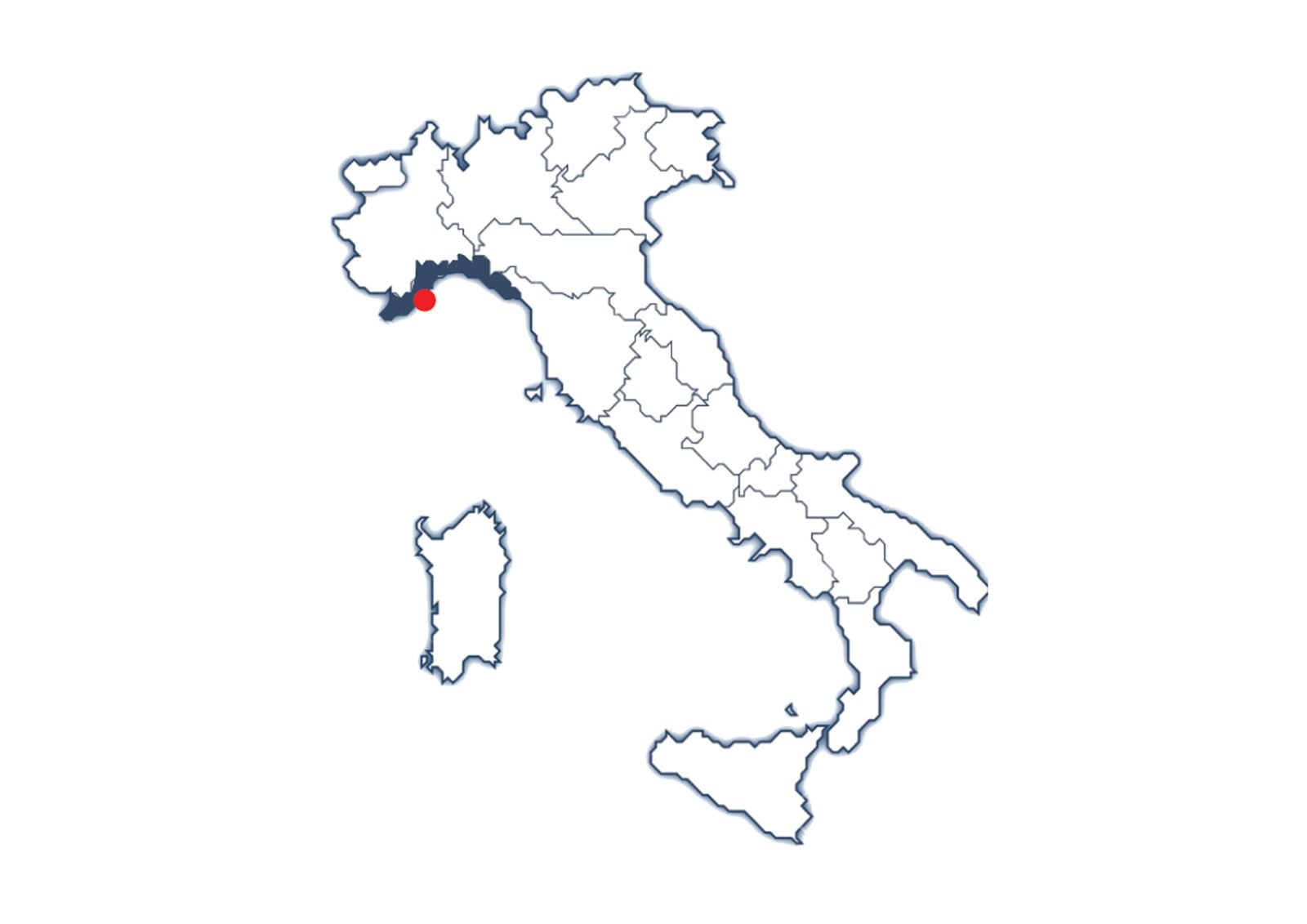
Borgo Castello — “Ricordare il passato per costruire il futuro” — is the Liguria Region’s pilot project under PNRR Missione 1, Componente 3: Attrattività dei Borghi. Financed through NextGenerationEU, it funds the recovery and reprogramming of a medieval hilltop hamlet in Andora (SV) that has stood partially abandoned and in ruin for decades.
The scope covers six historic building complexes across two sub-lots: RC3, RD3, RD3-bis, and RD2 in the northern service sector (Sub-Lot 1.1), and RD1, RD5, and RD6 in the western sector with external infrastructure (Sub-Lot 1.2). The contract type is an Appalto Integrato — an integrated design-and-build procurement where the same team is responsible for executive design and construction, making the information model the binding source of truth for both disciplines simultaneously.
The Heritage BIM Challenge
Working on existing historic fabric changes the ground rules of BIM coordination. The buildings at Borgo Castello are not clean CAD geometries — they are partially collapsed masonry structures with walls out of plumb, vaults of variable thickness, floors missing entirely, and geometries that no survey ever captured cleanly. Standard BIM authoring assumes idealised geometry; HBIM on ruined buildings requires managing the gap between what the point cloud shows and what the model can represent.
Point cloud data from laser scanning provides the geometric reference for the existing state. Every modelled element — whether a surviving wall, an existing vault to be consolidated, or a collapsed floor to be reinstated — is positioned and verified against this survey baseline. The model does not replace the point cloud; it interprets it, and the point cloud retains contractual primacy over the model for any geometric dispute about the existing condition.
The intervention phasing adds a second layer of complexity. Each drawing must show three states simultaneously: what is there now, what is to be demolished, and what is new. The BIM protocol implements this through Revit’s phase filters, displayed as the standard Italian restoration convention — existing elements in their natural graphic weight, demolitions flagged in yellow (giallo), new construction flagged in red (rosso). Every published drawing must carry the correct phase filter; any view without a locked filter is excluded from the sheet set.
Information Management — The pGI
The Piano di Gestione Informativa (pGI) is the document that defines, for the entire project lifecycle, how digital information is produced, shared, validated, and delivered. It is the contractor’s response to the client’s Capitolato Informativo — the BIM brief — and it governs everything from folder naming conventions and model file size limits to the RACI matrix of responsibilities and the approval gates before any model can be promoted to a shared or published state.
Authoring the pGI for Borgo Castello required translating the requirements of both UNI 11337 and UNI EN ISO 19650 into a working protocol calibrated to the specific constraints of this project: six buildings across two lots, an integrated contract where design and construction teams share the same models, a heritage context where the existing state is as important to document as the design, and a PNRR funding framework that imposes external milestone deadlines with legal consequences for slippage.
Federated Model Structure
Each building complex has its own disciplinary model files — architecture, structure, MEP — authored separately and federated at the coordination level. A master site model (URB) hosts all building links as attachments, providing the vehicle for general arrangement drawings, site plans, and photorealistic visualisations. Disciplinary models link to each other as overlays: structural models carry the architectural model in the background for slab and beam coordination; architectural models carry the structural and MEP links for service routing and forometry checks.
The view strategy enforces strict separation between working views (00_WIP — not permitted on sheets), published documentation views (01_PUB — all drawings derived from these), export views (02_EXP — IFC and DWG outputs only), and coordination views (03_COORD — for internal clash review). This prevents the accretion of half-finished geometry into deliverable drawings, which on a project with dozens of sheet packages across multiple buildings becomes a quality control problem without systematic enforcement.
BIM Dimensions — 4D to 7D
Beyond 3D coordination, the project mandate extends across the full range of BIM uses required by the PNRR framework:
4D — Construction Phasing. The construction programme is linked to the model through Pset_4D parameters on every element — start date, end date, construction sequence, WBS code. This produces a visual simulation of the construction timeline that serves both internal logistics planning and PNRR milestone reporting. For a borgo with restricted vehicular access and complex staging requirements, the 4D model is a planning tool as much as a contract record.
5D — Quantity Takeoff and Cost. Quantities are extracted directly from the model through Pset_Computo parameters. The principle of single-source extraction is contractually binding: no quantity may be presented in the BOQ that differs from what is computable from the model geometry. For HBIM elements, where the distinction between restoration work and new construction affects unit rates, elements are classified by intervention type to ensure the correct pricing schedule applies to each item.
6D — Facility Management. The model is delivered as an Asset Information Model (AIM) at handover — every installed component carrying the data needed for the municipality’s maintenance programme: manufacturer, model reference, warranty period, maintenance schedule, accessible component manual.
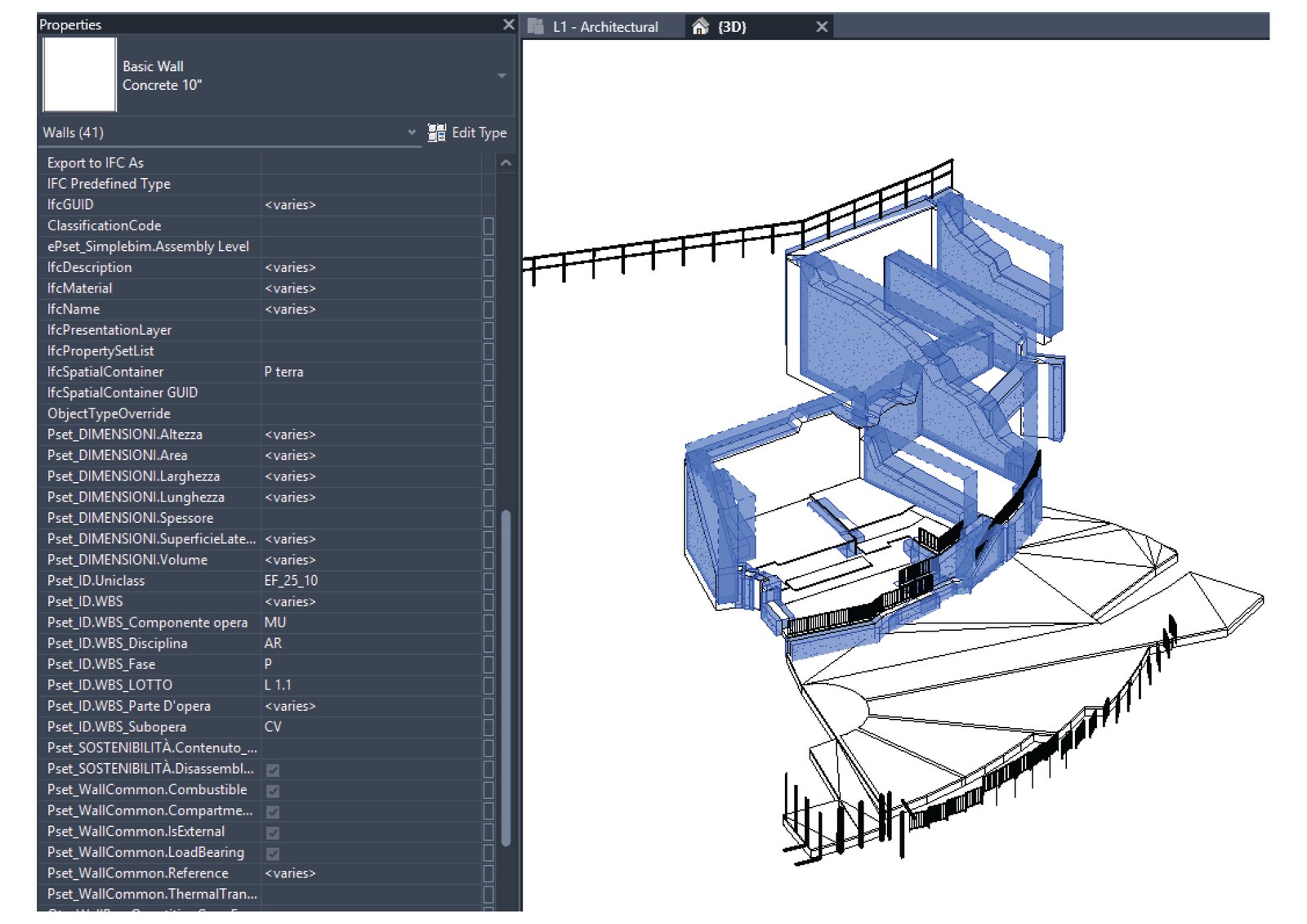
7D — Sustainability and PNRR Compliance. The project is subject to DNSH (Do No Significant Harm) obligations under the European PNRR framework and is required to monitor social sustainability indicators through the S-LCA (Social Life Cycle Assessment) methodology. These are not post-design additions — they are embedded in the model as Pset_Sostenibilita parameters from the outset, updated at each milestone, and included in the mandatory PNRR reporting deliverables.
Clash Detection and Archaeological Coordination
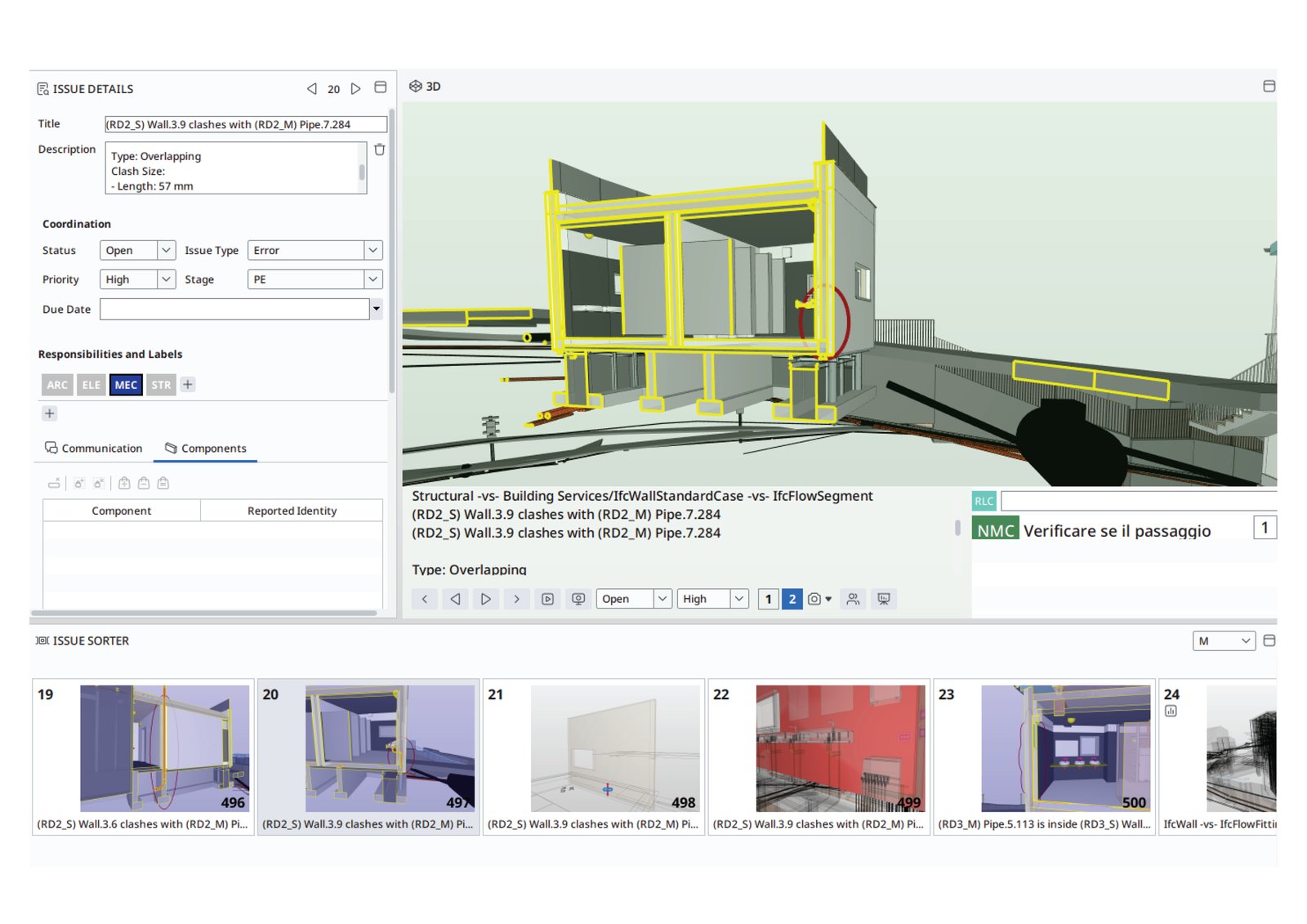
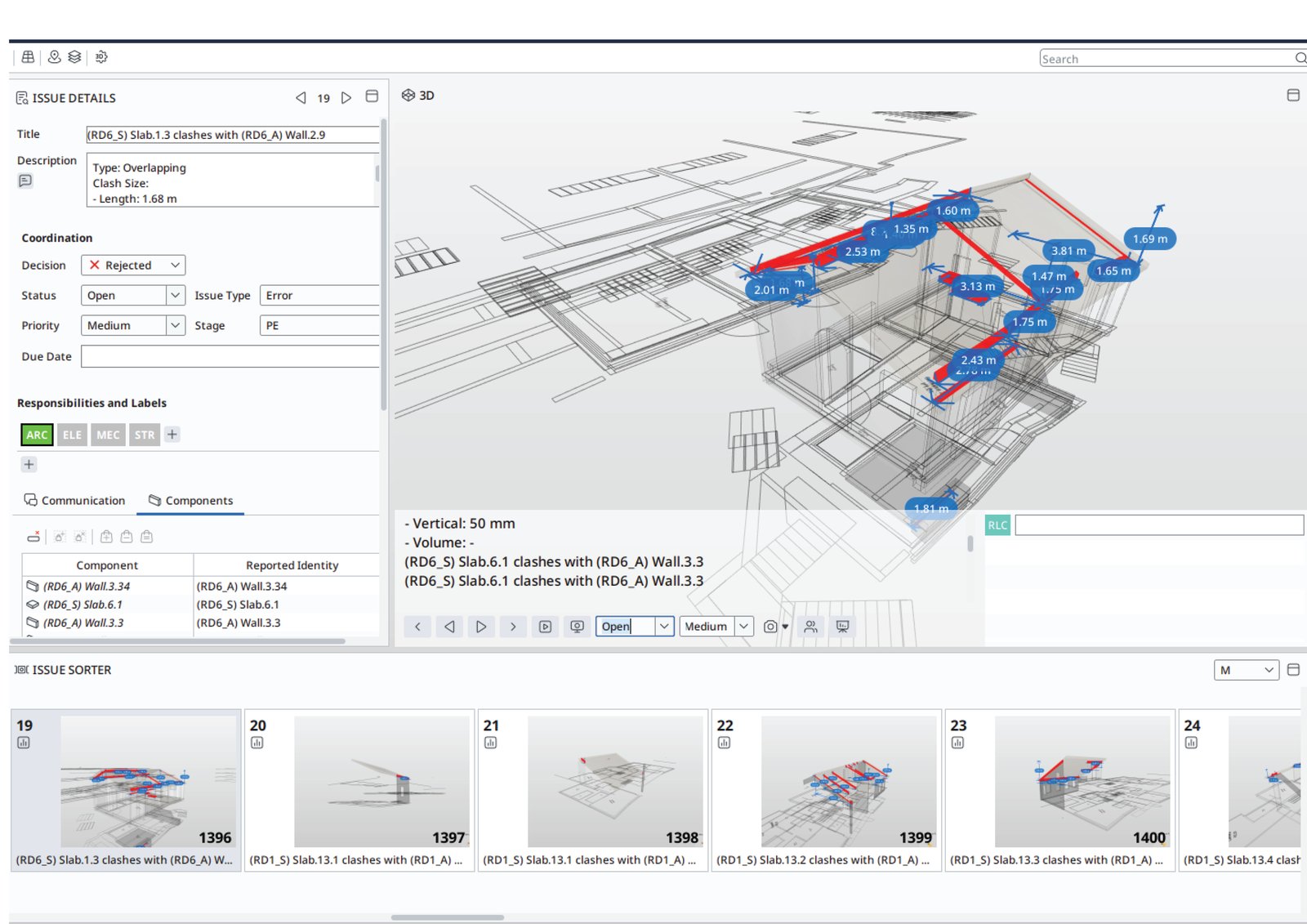
The clash detection protocol addresses two categories of conflict specific to heritage restoration. Hard clashes between new structural consolidation elements — steel frames, reinforced concrete tie beams, new floor slabs — and the existing masonry fabric are caught in Navisworks before any construction work begins. In a building where vaults and arches are to be preserved, the tolerance between a new tie rod and a historic stone springer is measured in centimetres; automated clash detection at 50mm and 20mm tolerance thresholds identifies every conflict for resolution by the structural and architectural leads.
The second category is archaeological: the subsoil beneath Borgo Castello carries the probability of undocumented archaeology, and the information model maintains a spatial reservation zone around confirmed and potential archaeological areas. Construction sequencing in the 4D model flags these zones to the site manager before excavation begins, providing a documented chain of awareness that satisfies both the cultural heritage authority and the PNRR audit trail.