Overview
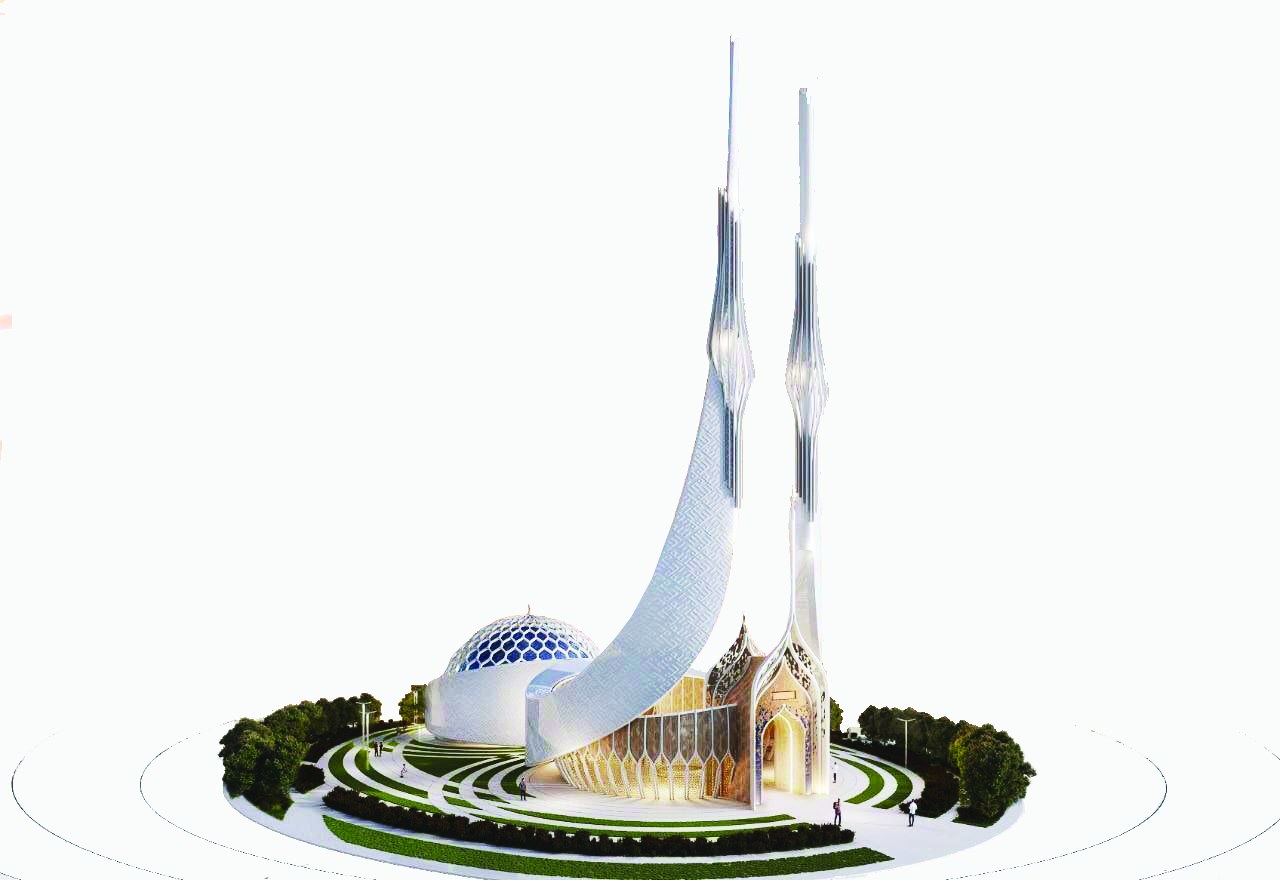
The Shusha Mosque was selected through an international design competition won by Simmetrico in collaboration with iDEAS. Located in Shusha — a city of deep cultural significance in Azerbaijan — the project carries both architectural and political weight. The design synthesizes contemporary structural expression with references to Islamic geometric tradition: two tapering minarets rise from a curved enclosure that also houses a hexagonal dome.
Design Geometry
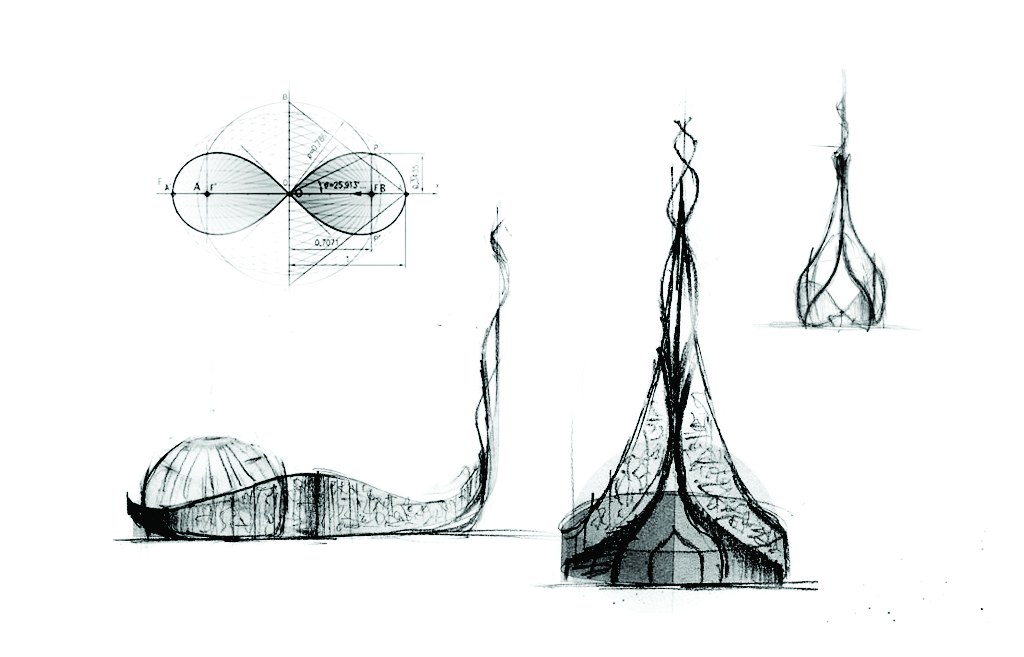
The architectural concept is grounded in a geometric operation derived from the lemniscate — an infinity-curve form that generates both the plan organization and the sectional profile of the enclosure. The minarets emerge from this curved base, their surfaces resolved through ruled geometry that allows complex curvature with a rational structural logic.

BIM Role
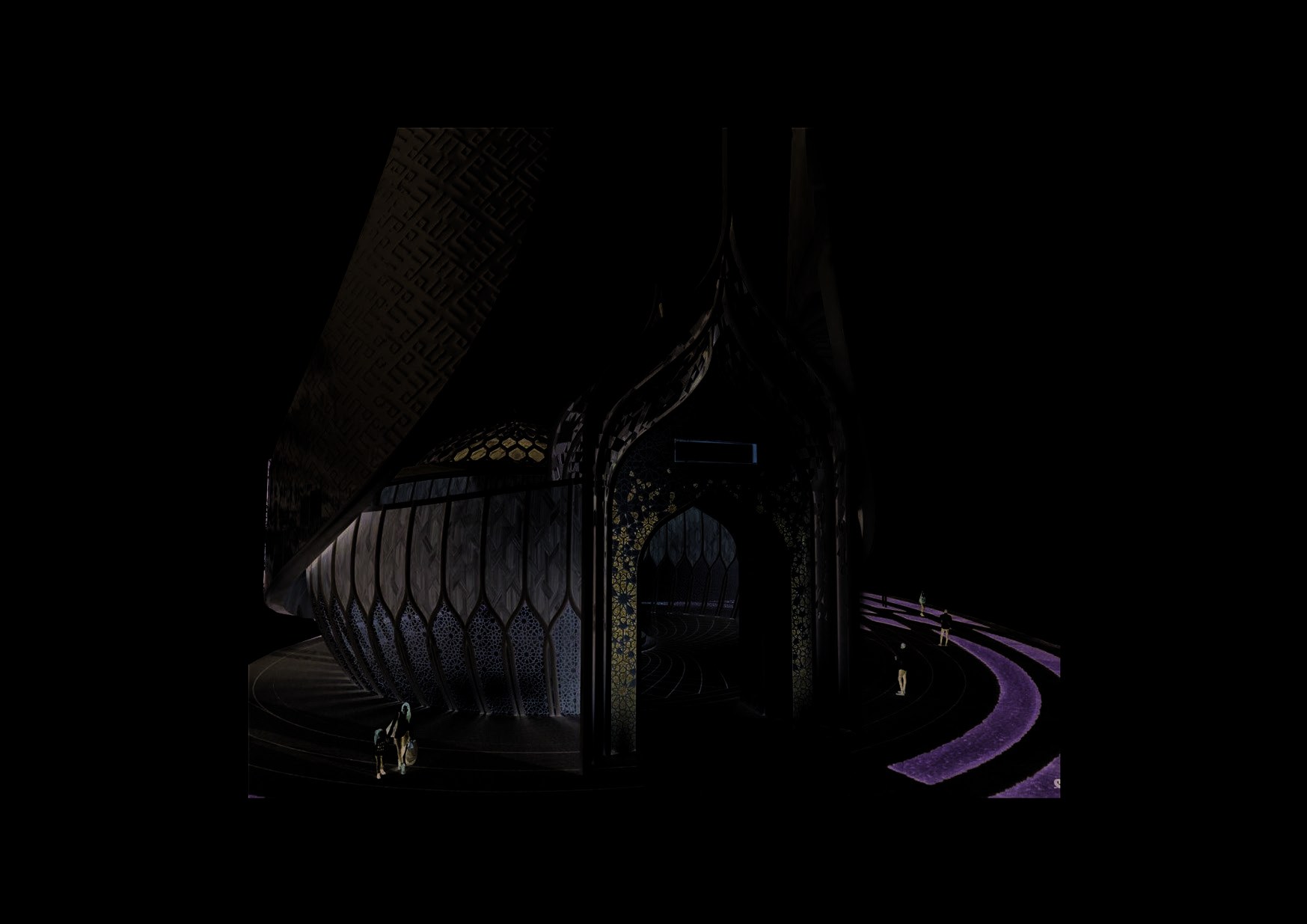
The project required detailed BIM modeling of the structural and facade systems. The main hall dome uses a steel hexagrid structure — a triangulated lattice that distributes loads efficiently across the curved surface while producing the geometric patterning visible from the interior. The facade system combines a steel diagrid with an ETFE membrane cladding: a lightweight, translucent material that gives the building its luminous quality at night.
Content creation involved building Revit families for the custom structural connections and membrane panels — documented to a level of detail sufficient for coordination with structural and mechanical engineers across the iDEAS and Simmetrico teams.
Coordination
Model coordination and clash detection were managed through BIM 360 across the full multi-discipline model. The curved geometry of the enclosure and the density of structural connections in the dome created a coordination environment where standard clearance assumptions did not apply — systematic review was essential at each stage.